


The Question Most Clinics Still Miss

Healthcare is changing fast. More clinics now rely on remote teams, digital tools, and medical virtual assistants (VAs). As a result, operations are smoother and more scalable. However, a deeper issue often goes unaddressed.
Who actually owns the data?
At first, the answer seems simple. The clinic serves the patient, pays for the systems, and hires the team. Therefore, it should own the data. Yet, in practice, things are more complex.
Today, data is:
- Created by different people
- Stored in cloud systems
- Accessed across borders
- Processed by multiple tools
Because of this, ownership is no longer straightforward. Instead, it overlaps with access and control.
This matters more than most clinics realize. Without clarity, you risk:
- Compliance failures
- Data leaks
- Loss of intellectual property
- Operational breakdowns
- Damaged patient trust
So, this article breaks it down. Step by step, we will explore how to manage data ownership in a virtual healthcare environment—clearly, safely, and strategically.
1. What “Data” Means in Virtual Healthcare

To begin with, not all data is the same. Many clinics treat it as one category. However, that approach creates blind spots.
Instead, think of data in layers.
a). Patient Health Information (PHI)
First, there is clinical data. This includes diagnoses, treatment plans, lab results, and notes. Clearly, this is the most sensitive type. Therefore, it requires strict protection and compliance.
b). Administrative Data
Next, there is operational support data. This includes scheduling, billing, and insurance details. Although it is less sensitive than PHI, it still needs protection.
c). Operational Data
In addition, clinics generate internal data. For example, SOPs, workflows, and templates. This data drives efficiency behind the scenes.
d). Intellectual Property (IP)
Then comes a critical but often ignored layer. IP includes:
- Training systems
- Communication scripts
- Automation workflows
- Internal playbooks
e). Derived Data
Finally, there is insight-based data. Reports, dashboards, and analytics fall into this category.
Why This Matters
Each type of data carries different risks. For instance, PHI demands strict legal compliance. On the other hand, IP requires strategic protection.
Therefore, smart clinics do not treat data as one block. Instead, they classify and manage it carefully.
2. Ownership vs Access vs Control

Now, let’s address a key misunderstanding.
Many clinics believe:
“If we own the data, we control it.”
However, that is not always true.
Ownership
Ownership refers to legal rights. In most cases, the clinic owns patient and operational data.
Access
Access defines who can see or use the data.
Control
Control determines who can manage, transfer, or restrict the data.
Why This Difference Matters
In virtual teams, these roles often split.
For example:
- A VA enters patient data
- A platform stores it
- A clinic claims ownership
- A system processes it
As a result, control becomes shared. If this is not managed well, gaps appear.
In short, ownership is legal. Control is practical. And in real operations, control matters more.
3. The Hidden Risk of Fragmented Systems

Modern healthcare runs on multiple tools. This improves speed. However, it also increases complexity.
Common systems include:
- EHR/EMR(Electronic Health Records / Electronic Medical Records) platforms
- Communication tools
- Cloud storage
- Task managers
- Automation systems
Where Problems Begin
When systems are not aligned, issues arise.
For instance:
- Too many people have full access
- Logins are shared informally
- Files exist in many places
- No clear tracking exists
- Offboarding is delayed
A Real-World Scenario
Imagine this. A VA leaves your team. However, they still have access to key systems.
They can still see:
- Patient records
- Internal workflows
- Communication channels
At that point, ownership no longer protects you. Instead, lack of control becomes the real risk.
4. Intellectual Property: The Silent Asset

Most clinics focus on patient data. That makes sense. However, they often ignore their own systems.
This is a mistake.
Operational IP includes:
- Scheduling systems
- Billing processes
- Communication flows
- Training programs
Why IP(Intellectual Property) Deserves Attention
Your IP defines how your clinic runs. It shapes:
- Efficiency
- Consistency
- Growth potential
Without protection, problems follow.
For example:
- Systems can be copied
- Processes can be reused elsewhere
- Competitive advantage disappears
A Simple Rule
If IP ownership is not written clearly, it is not protected.
Therefore, clinics must treat IP as a core asset—not an afterthought.
5. Legal Foundations: Setting Clear Boundaries

Strong systems start with strong agreements. Without them, everything else is weak.
Key Legal Tools
Non-Disclosure Agreements (NDAs)
These protect sensitive information. They apply to both patient and business data.
IP Assignment Clauses
These ensure all created work belongs to the clinic.
Data Protection Agreements (DPAs)
These define how data is handled and stored.
Access Agreements
These limit who can see what.
Offboarding Clauses
These ensure access is removed immediately when someone leaves.
A Common Mistake
Many clinics use basic contracts. Unfortunately, these often miss healthcare-specific risks.
As a result, gaps appear. And those gaps create exposure.
6. Access Control: Turning Policy Into Practice

Legal documents set rules. However, systems enforce them.
Without proper access control, policies fail.
Practical Steps
Use Role-Based Access (RBAC)
Give access based on job needs only.
Centralize Credentials
Avoid sharing passwords. Instead, use secure tools.
Enable Multi-Factor Authentication (MFA)
Add an extra security layer.
Track Activity
Use audit logs to monitor access.
Adopt Zero-Trust Thinking
Always verify access. Never assume trust.
Why This Works
These steps reduce risk. At the same time, they improve accountability.
In other words, good access control protects both data and operations.
7. The Platform Layer: Control Beyond Your Clinic

Now, consider another factor—software platforms.
Your systems do more than store data. They also shape control.
Important Questions
Before choosing tools, ask:
- Can I export my data easily?
- Who owns the stored data?
- Where is the data hosted?
- Is it encrypted?
- What happens if I leave the platform?
The Risk
Some platforms limit access or export. This creates vendor lock-in.
As a result, even if you “own” the data, you may not control it fully.
8. Ethics: More Than Compliance
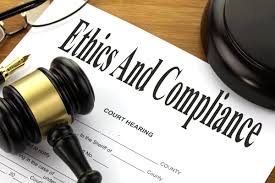
Data is not just technical. It is personal.
Patients trust clinics with sensitive information. Therefore, responsibility goes beyond legal rules.
Ethical Priorities
- Limit unnecessary access
- Protect patient dignity
- Respect cultural differences
- Ensure clear communication
A Key Insight
Even when systems work well, ethics must guide decisions. Without it, trust erodes.
9. Building a Data Governance Framework

To manage everything well, clinics need structure.
A strong framework includes:
Data Classification
Group data by sensitivity.
Access Mapping
Define who accesses what.
Lifecycle Management
Track data from start to deletion.
Incident Response
Prepare for breaches.
Continuous Review
Audit systems regularly.
The Goal
The aim is not just protection. Instead, it is safe and scalable growth.
10. The Future: Control Will Define Success

Healthcare is evolving. Teams are global. Systems are connected. AI is growing.
Because of this, data is always moving.
What This Means
Ownership still matters. However, control matters more.
Clinics that succeed will:
- Define ownership clearly
- Manage access tightly
- Build strong systems
Control Is the New Ownership
So, who owns the data?
Legally, the clinic often does.
Practically, it depends on systems.
Strategically, it comes down to control.
Final Takeaways
Ownership alone is not enough.
Virtual teams increase complexity.
IP is a key asset.
Systems must match legal intent.
Ethics must guide decisions.
Leading medical virtual assistant providers—such as Altura Assist—are setting the standard by combining strong legal frameworks with secure, well-managed systems. They show that true data protection is not just about contracts, but about operational control and accountability at every level.
If you cannot answer:
- Who owns your data
- Who can access it
- Who controls it
Then your system is not secure.
Instead, it is exposed.
Call to Action
If you are scaling with virtual assistants, do not leave control to chance. Audit your systems, strengthen your safeguards, and partner with trusted providers like Altura Assist to build a secure, compliant, and future-ready operation.


