




Why Human Connection Still Defines Modern Healthcare


Healthcare is evolving faster than ever. Telehealth, automation, and remote teams are no longer optional—they are essential. Clinics, hospitals, and private practices now rely heavily on digital systems and medical virtual assistants (MVAs) to scale operations and improve efficiency.
However, amid this transformation, one critical question often gets overlooked:
What happens to the human connection in remote care?
While technology improves access and speed, it can unintentionally strip away empathy, clarity, and emotional understanding—three elements that define patient experience.
This is where forward-thinking providers stand apart. Industry leaders like Altura Assist, a leading medical virtual assistant (MVA) provider, recognize that remote care must be both efficient and deeply human. They combine operational excellence with empathy-driven communication systems, ensuring patients feel heard, supported, and valued at every touchpoint.
In this article, we explore the human side of remote care in depth—focusing on empathy, language, tone, and patient experience—and how healthcare organizations can optimize these elements for better outcomes and stronger patient trust.
1. Remote Care Is a Human Experience—Not Just a Digital Process

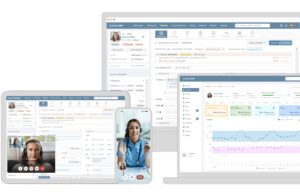
Remote care is often discussed in terms of technology:
- Telehealth platforms
- Electronic health records (EHRs)
- Automation tools
- AI-driven workflows
However, patients don’t experience systems—they experience interactions.
Every message, call, or follow-up becomes a defining moment. Without face-to-face interaction, communication carries the full weight of care delivery.
Why This Matters for SEO(search engine optimized hyperlink) and Patient Retention
From an SEO perspective, patient satisfaction directly impacts:
- Online reviews
- Engagement metrics
- Bounce rates
- Brand trust signals
Google increasingly prioritizes Experience, Expertise, Authority, and Trust (E-E-A-T). A strong patient experience strengthens all four.
Therefore, optimizing remote care is not just operational—it’s also strategic for visibility and growth.
2. Empathy in Remote Healthcare: A Critical Success Factor


What Is Empathy in Remote Care?
Empathy is the ability to understand and respond to a patient’s emotional state. In a physical setting, empathy is often conveyed through body language and presence. However, in remote care, it must be communicated through words, tone, and timing.
Common Breakdown in Remote Systems
Without proper training, remote healthcare teams may default to:
- Scripted responses
- Transactional communication
- Impersonal messaging
For example:
- “Your request has been received.”
- “Refer to previous instructions.”
While efficient, these responses lack emotional awareness.
SEO Insight: Why Empathy Improves Rankings
Empathetic communication leads to:
- Higher patient satisfaction
- More positive reviews
- Increased referrals
- Lower churn rates
These factors indirectly boost search rankings through improved credibility and engagement.
How to Build Empathy Into Systems
To scale empathy effectively:
- Train teams to identify emotional cues in text and voice
- Use acknowledgment phrases (“I understand this may be frustrating…”)
- Allow flexibility beyond rigid scripts
- Encourage active listening during calls
3. The Power of Language in Patient Experience

Why Language Is Everything in Remote Care
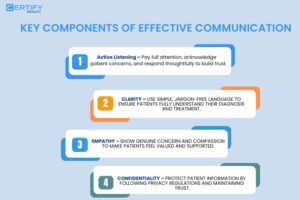
In remote healthcare, language replaces physical presence. It shapes how patients interpret care quality, professionalism, and trustworthiness.
Every sentence answers three key questions:
- Do you understand me?
- Do you care about my situation?
- Can I trust you?
Avoiding Clinical and Robotic Language
Healthcare professionals often use technical language. However, patients need clarity—not complexity.
Instead of:
“Your results are within normal parameters.”
Use:
“Your results look good—there’s nothing to worry about.”
SEO Optimization Through Readability
Google favors content—and by extension, communication—that is:
- Easy to read
- Clear and direct
- Accessible to a broad audience
This applies not only to blogs but also to patient communication.
Best Practices for Patient-Friendly Language
- Use simple, everyday words
- Avoid jargon unless necessary
- Break down complex instructions
- Confirm understanding when needed
When MVAs are trained in clear communication, patient confusion decreases significantly—improving both outcomes and satisfaction.
4. Tone: The Invisible Driver of Trust in Telehealth


Tone is one of the most powerful—and overlooked—elements in remote care.
Why Tone Matters
Without visual cues, patients rely entirely on:
- Word choice
- Sentence structure
- Response timing
A neutral message can easily be perceived as cold or dismissive.
Examples of Tone Differences
Cold Tone:
“Submit your documents.”
Empathetic Tone:
“Please upload your documents when you’re ready, and let me know if you need help.”
Channel-Specific Tone Optimization
Email:
- Professional but warm
- Structured with clear next steps
Live Chat:
- Conversational and responsive
- Avoid abrupt replies
Phone Calls:
- Use pauses and active listening
- Avoid rushing the patient
System-Level Tone Consistency
Organizations should:
- Provide tone guidelines (not rigid scripts)
- Share examples of effective communication
- Regularly audit patient interactions
This ensures consistency without sacrificing authenticity.
5. Cultural Sensitivity in Global Remote Care


Remote healthcare often involves cross-border teams and diverse patient populations.
Challenges in Cross-Cultural Communication
- Language barriers
- Different communication styles
- Varying expectations of politeness and authority
Common Mistakes
- Using slang or idioms
- Assuming understanding
- Misinterpreting tone
How to Build Cultural Intelligence
- Use neutral, globally understood language
- Encourage clarification (“Would you like me to explain further?”)
- Train teams in cultural awareness
6. Patient Experience: The Ultimate Competitive Advantage
What Defines Patient Experience in Remote Care?
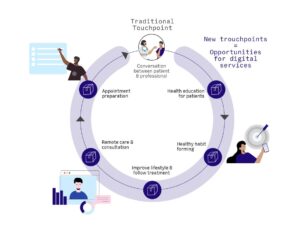
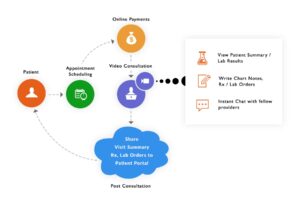
Patient experience is built through small, consistent interactions:
- Response time
- Clarity of communication
- Emotional tone
- Problem resolution
What Patients Actually Remember
Patients rarely recall technical details. Instead, they remember:
- How they were treated
- Whether they felt heard
- How quickly issues were resolved
SEO Impact of Patient Experience
A strong patient experience leads to:
- Positive Google reviews
- Higher retention rates
- Increased organic referrals
These signals significantly improve online visibility.
7. The Role of Medical Virtual Assistants (MVAs)


Medical virtual assistants are at the heart of remote care systems.
Beyond Administrative Support
MVAs:
- Handle patient communication
- Manage scheduling and follow-ups
- Act as the first point of contact
This makes them critical to patient experience.
The Risk of Poor Training
Without proper training:
- Communication becomes robotic
- Errors increase
- Patient trust declines
The Advantage of Skilled MVAs
Well-trained MVAs:
- Improve communication clarity
- Enhance patient satisfaction
- Reduce provider workload
Altura Assist, as a leading MVA provider, stands out by combining technical efficiency with human-centered training—ensuring that every assistant delivers both accuracy and empathy.
8. Designing Human-Centered Remote Care Systems

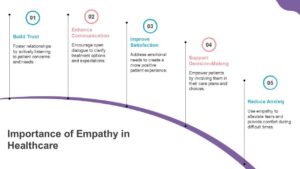
To truly optimize remote care, organizations must design systems that support human interaction.
Key Strategies
1. Flexible Communication Frameworks
Provide guidance without restricting personalization.
2. Measure What Matters
Track patient satisfaction—not just response speed.
3. Continuous Training
Invest in communication and empathy development.
4. Feedback Loops
Regularly review interactions to identify improvement areas.
5. Escalation Protocols
Ensure sensitive cases are handled with extra care.
9. The Future of Remote Healthcare: Technology + Humanity


The future of healthcare will include:
However, technology alone is not enough.
The Real Differentiator
Healthcare providers who succeed will:
- Prioritize empathy as a core skill
- Treat communication as clinical infrastructure
- Balance automation with human oversight
Organizations that ignore the human side risk becoming efficient—but forgettable.
Human Connection Is the Foundation of Remote Care


Remote care is here to stay. It offers unmatched convenience, scalability, and efficiency. However, its success ultimately depends on something far less technical:
Human connection.
Empathy, language, and tone are not soft skills—they are essential components of modern healthcare delivery.
Patients want more than quick responses. They want to feel:
- Understood
- Respected
- Supported
Healthcare organizations that recognize this will not only improve patient outcomes but also strengthen their brand, reputation, and search visibility.
This is why providers like Altura Assist are leading the way. By combining operational excellence with empathy-driven communication, they ensure that remote care remains deeply human—no matter how advanced the technology becomes.
Final Takeaways
- Remote care is a human experience, not just a digital system
- Empathy must be built into workflows, not left to chance
- Language should be clear, simple, and reassuring
- Tone directly impacts patient trust and satisfaction
- MVAs play a critical role in shaping patient experience
- Strong patient experience improves SEO rankings and growth


