




As AI-powered tools and Medical Virtual Assistants (MVAs) become deeply embedded in modern healthcare workflows, ensuring compliance with the Health Insurance Portability and Accountability Act (HIPAA) is not optional—it is foundational. From AI-driven triage systems and automated clinical documentation to patient-facing chatbots and predictive analytics engines, these technologies increasingly handle vast volumes of sensitive patient data. Any AI system that creates, receives, stores, processes, analyzes, or transmits Protected Health Information (PHI) must fully align with HIPAA’s Privacy, Security, and Breach Notification Rules.
The regulatory stakes are high. HIPAA violations can result in significant financial penalties, reputational damage, litigation exposure, and loss of patient trust. More importantly, healthcare data is among the most sensitive categories of personal information. Unlike other industries, a breach in healthcare does not merely expose financial data—it can reveal diagnoses, mental health records, genetic information, and deeply personal medical histories.
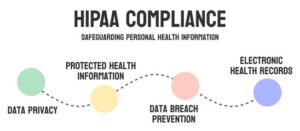
AI introduces additional layers of complexity to compliance. Machine learning systems may retain data for model improvement, generate derivative outputs from patient records, or integrate with third-party cloud infrastructures. Voice-enabled MVAs may capture recordings; conversational systems may log transcripts; decision-support tools may analyze longitudinal patient data. Each of these activities potentially implicates HIPAA requirements.
Therefore, healthcare organizations deploying AI-driven solutions—whether for triage, documentation, patient engagement, analytics, remote monitoring, revenue cycle management, or clinical decision support—must treat HIPAA compliance not as a one-time checkbox, but as a continuous governance framework. This includes vendor due diligence, formal risk assessments, data minimization practices, encryption standards, audit logging, access controls, and clearly defined breach response protocols.
In the age of intelligent healthcare automation, regulatory compliance is not a barrier to innovation—it is the foundation that enables responsible, scalable, and trustworthy AI deployment.
1. Understanding HIPAA in the AI Era
The Health Insurance Portability and Accountability Act was enacted in 1996 to protect sensitive patient data and standardize healthcare data exchange. While written long before modern AI systems, its core principles apply fully to digital health technologies.
HIPAA applies to:
- Covered Entities– Organizations directly responsible for delivering or paying for healthcare and therefore responsible for protecting Protected Health Information (PHI). This includes healthcare providers (hospitals, clinics, physicians, laboratories, pharmacies), health plans (insurance companies, HMOs, employer-sponsored health plans, government programs), and healthcare clearinghouses (entities that process and standardize health information for billing and administrative purposes). They are legally required to implement safeguards to ensure PHI privacy, security, and compliance.
- Business Associates– Third-party organizations or individuals that create, receive, store, transmit, or process PHI on behalf of covered entities. This includes AI vendors, Medical Virtual Assistant (MVA) providers, cloud service providers, billing companies, data analytics firms, and IT support vendors. Business associates must comply with PHI protection requirements and typically sign a Business Associate Agreement (BAA) outlining their legal responsibilities for safeguarding patient data.
If your AI vendor processes patient data, they are legally considered a Business Associate and must sign a Business Associate Agreement (BAA).
2. What Counts as Protected Health Information (PHI)?
PHI includes any individually identifiable health information relating to:
- Medical conditions
- Diagnosis and treatment
- Payment and billing information
- Insurance details
- Demographic identifiers linked to health data
Examples in an AI/MVA context:
- Voice recordings of patient conversations
- Chat transcripts
- Clinical notes generated by AI
- Uploaded lab reports or imaging results
- Appointment scheduling data tied to patient identity
Even metadata (IP address + medical query) can become PHI when linked to an identifiable individual.
3. The Three Core HIPAA Rules and AI Compliance
A. Privacy Rule
The HIPAA Privacy Rule governs how Protected Health Information (PHI) is used, accessed, and disclosed to protect patient confidentiality. For AI systems, this means PHI can only be used for permitted healthcare purposes such as treatment, payment, and healthcare operations. Patients must be informed about how their data is used, and AI systems must follow the Minimum Necessary Standard, accessing only the information required to perform their specific function. Any secondary use of PHI—such as AI model training, analytics, or system improvement—must include strict safeguards, such as explicit authorization or proper de-identification, to ensure patient privacy is preserved.
AI Risk Area:
Retraining machine learning models with patient data without appropriate authorization or proper de-identification can constitute a HIPAA violation.
B. Security Rule
The HIPAA Security Rule mandates administrative, physical, and technical safeguards.
1. Administrative Safeguards
- Risk assessments before AI deployment– Conduct formal evaluations to identify potential privacy, security, and compliance risks associated with the AI system, ensuring safeguards are in place before it accesses Protected Health Information (PHI).
- Workforce training on AI data handling– Ensure all staff interacting with AI systems are trained on proper PHI handling, privacy requirements, and secure use of AI tools to prevent accidental disclosure or misuse of sensitive data.
- Role-based access control policies– Restrict access to PHI within AI systems based on job roles and responsibilities, ensuring users can only access the minimum data necessary to perform their duties.
- Vendor due diligence– Carefully evaluate AI vendors to confirm they meet regulatory, security, and privacy standards, including signing appropriate agreements and demonstrating strong data protection practices.
2. Technical Safeguards
AI systems must implement:
- End-to-end encryption (data in transit and at rest)
- Multi-factor authentication
- Audit logs and monitoring
- Automatic session timeouts
- Secure API architecture
3. Physical Safeguards
- Secure data centers– Ensure that servers hosting AI systems and PHI are located in facilities with strong physical protections such as surveillance, restricted entry, and environmental safeguards to prevent unauthorized access or damage.
- Controlled hardware access– Limit physical access to computers, servers, and storage devices containing PHI to authorized personnel only, using measures such as keycards, biometric authentication, and access logs.
- Secure device management– Implement safeguards such as encryption, password protection, remote wipe capability, and regular security updates on all devices used to access or manage AI systems and PHI.
- Cloud-hosted AI tools must demonstrate HIPAA-grade security infrastructure– Cloud providers supporting AI systems must implement robust protections including encryption, access controls, audit logging, and formal compliance commitments such as Business Associate Agreements (BAAs).
C. Breach Notification Rule
If PHI is compromised, HIPAA requires:
- Notification to affected individuals
- Notification to the U.S. Department of Health & Human Services
- In some cases, media notification
- AI systems increase the attack surface for cybersecurity threats. Therefore:
- Continuous monitoring is essential
- Incident response plans must include AI vendors
- Penetration testing and vulnerability scanning should be routine
4. Business Associate Agreements (BAAs) and AI Vendors
A BAA is mandatory when an AI vendor handles PHI.
It should clearly define:
- Permitted uses of PHI– Clearly define how Protected Health Information may be used and disclosed, ensuring it is limited to authorized purposes such as treatment, payment, and healthcare operations.
- Data storage and encryption standards– Require PHI to be securely stored and protected using strong encryption, secure servers, and appropriate technical safeguards to prevent unauthorized access.
- Subcontractor obligations– Ensure that any subcontractors who access PHI are bound by the same privacy, security, and compliance requirements as the primary vendor.
- Breach response timelines– Establish defined procedures and timelines for detecting, reporting, and responding to data breaches to ensure timely notification and mitigation.
- Data destruction policies– Specify how and when PHI must be securely deleted or destroyed to prevent unauthorized access after it is no longer needed.
Without a signed BAA, using an AI tool that processes PHI is a direct HIPAA violation.
5. De-Identification and AI Model Training
AI systems rely on large datasets to continuously improve performance and accuracy. Under the Health Insurance Portability and Accountability Act (HIPAA), there are two approved pathways for de-identifying protected health information (PHI). The first is the Safe Harbor Method, which requires the removal of 18 specific identifiers that could link data to an individual. The second is the Expert Determination Method, where a qualified expert applies statistical analysis to certify that the risk of re-identification is very low. Importantly, data that has not been properly de-identified remains PHI—even if obvious identifiers such as names have been removed. Therefore, healthcare organizations must carefully verify whether AI vendors use PHI for model training, whether patient data is retained, and whether all model improvement processes comply fully with HIPAA requirements and applicable privacy regulations.
6. Emerging Challenges: AI-Specific HIPAA Risks
- Generative AI and Clinical Risk
Generative AI can produce inaccurate or misleading clinical recommendations, potentially introducing errors into patient records and creating legal and liability exposure for healthcare organizations. - Shadow AI
When staff use unauthorized AI tools—such as public chatbots—to summarize or analyze patient information, they risk unintentional PHI disclosure, bypassing established compliance controls. - Cross-Border Data Storage
AI vendors storing healthcare data across international borders expose organizations to jurisdictional risks, including differing privacy regulations, data residency requirements, and potential conflicts between local and foreign laws.
7. Practical Steps to Ensure HIPAA-Compliant AI Deployment
Before implementing an MVA or AI system:
✔ Conduct a formal risk assessment
✔ Verify HIPAA compliance documentation
✔ Sign a Business Associate Agreement
✔ Confirm encryption standards
✔ Restrict data access using least-privilege principles
✔ Ensure audit trail capabilities
✔ Train staff on proper AI usage
✔ Establish a documented breach response plan
✔ Require transparency in AI model training practices
Compliance is not static—it requires ongoing monitoring, reassessment, and policy updates.
8. Documentation and Audit Readiness
Healthcare regulators may require proof of compliance.
Organizations should maintain:
- Vendor compliance certifications
- Security risk analysis reports
- Incident response documentation
- Access control logs
- AI governance policies
Being audit-ready protects both patients and institutions.
9. The Ethical Dimension of HIPAA in AI
Beyond legal compliance, HIPAA alignment reinforces:
- Patient trust
- Institutional credibility
- Responsible innovation
- Risk mitigation
AI systems in healthcare are not just technological tools—they become part of the care delivery ecosystem. Protecting patient privacy is both a legal and moral obligation.
As AI and Medical Virtual Assistants like Altura Assist transform healthcare, HIPAA compliance must guide design, deployment, and governance. Any system handling patient data must follow the Privacy, Security, and Breach Notification Rules. Embedding HIPAA safeguards from the start reduces regulatory risk while building patient trust and supporting sustainable digital care.


