


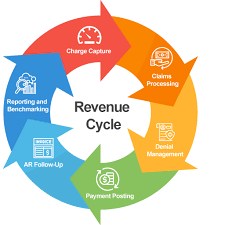

In today’s healthcare landscape, financial performance is inseparable from operational success. Reimbursements are becoming more complex, payer requirements are tightening, and claim denials are increasing across specialties. Even highly skilled providers can struggle with inconsistent cash flow if Revenue Cycle Management (RCM) processes are not optimized.
For many practices, the problem isn’t patient volume — it’s revenue leakage.
That’s where professional Revenue Cycle Management Support from a Medical Virtual Assistant (MVA) becomes a strategic advantage.
This article explores how outsourcing key RCM functions — including charge entry, claim tracking, unpaid claim follow-up, and financial reporting — can protect your revenue, stabilize cash flow, and create long-term financial sustainability for your medical practice.

What Is Revenue Cycle Management (RCM)?
Revenue Cycle Management refers to the financial process that tracks patient care episodes from initial scheduling and documentation through claim submission and final reimbursement.
A well-managed revenue cycle ensures:
-
Accurate coding and charge capture
-
Clean claim submission
-
Timely reimbursement
-
Low denial rates
-
Transparent financial reporting
-
Reduced Accounts Receivable (A/R) aging
When RCM processes break down, practices experience:
-
Increased claim denials
-
Delayed payments
-
Rising administrative costs
-
Poor financial visibility
-
Provider burnout from billing frustrations
Strong RCM is not optional — it is the backbone of a financially healthy healthcare practice.
Why Practices Are Outsourcing Revenue Cycle Management
Healthcare administrators are increasingly turning to Medical Virtual Assistants to handle revenue cycle tasks because:
-
In-house billing teams are expensive to maintain
-
Staff turnover disrupts workflow
-
Payer rules change frequently
-
Administrative burden reduces clinical focus
-
Small practices cannot justify full billing departments
Outsourcing to a trained Medical Virtual Assistant provides flexibility, cost control, and specialized expertise without the overhead of traditional staffing.
Our Comprehensive Revenue Cycle Management Support Services
1. Charge Entry: The Foundation of Accurate Reimbursement
Charge entry is where revenue protection begins. Even minor coding errors can lead to claim denials, compliance issues, or underpayment.
Our Medical Virtual Assistants provide:
-
Accurate Current Procedural Terminology(CPT), International Classification of Diseases, 10th Revision(ICD-10), and Healthcare Common Procedure Coding System(HCPCS) code entry
-
Modifier validation and correct application
-
Documentation review for completeness
-
Compliance checks against payer-specific guidelines
-
Immediate clarification of documentation inconsistencies
-
Charge lag monitoring to ensure timely submission
Why Charge Entry Matters
Incorrect charge capture results in:
-
Rejected claims
-
Downcoding
-
Delayed reimbursements
-
Increased rework
-
Audit risk
Precise charge entry reduces denial rates and improves first-pass claim acceptance — a critical metric for financial health.
2. Claim Tracking: Real-Time Revenue Visibility
Submitting claims without tracking them is one of the most common RCM weaknesses. Claims can sit unresolved for weeks without proper monitoring.
Our claim tracking process includes:
-
Daily clearinghouse monitoring
-
Insurance portal claim status verification
-
Immediate identification of rejections
-
Claim resubmission coordination
-
Documentation of payer communications
-
Escalation of stalled or delayed claims
The Impact of Structured Claim Tracking
-
Faster reimbursement cycles
-
Lower A/R days
-
Reduced revenue loss
-
Improved denial management
No claim should disappear into the system unnoticed. We ensure every submission is accounted for.
3. Follow-Up on Unpaid and Denied Claims
Unpaid claims represent earned revenue that has not yet been collected. Without proactive follow-up, practices lose significant income annually.
Our unpaid claim follow-up services include:
-
Weekly aging report analysis
-
Insurance follow-up calls and portal inquiries
-
Denial investigation and root cause analysis
-
Preparation and submission of appeals
-
Correction and resubmission of rejected claims
-
Underpayment identification
-
Documentation for compliance purposes
How This Improves Cash Flow
-
Reduces 30/60/90+ day aging balances
-
Improves overall collection rates
-
Identifies recurring billing errors
-
Strengthens payer accountability
Proactive A/R management ensures your practice gets paid for the services it delivers.
4. Financial Reporting Assistance: Turning Data into Decisions
Revenue Cycle Management without reporting is incomplete. Financial transparency allows leadership to make strategic decisions.
Our financial reporting assistance includes:
-
Monthly revenue summaries
-
Accounts Receivable aging reports
-
Denial rate tracking and trend analysis
-
Payer mix evaluation
-
Collection ratio monitoring
-
Charge lag reports
-
Revenue forecasting support
Why Financial Reporting Matters
Clear reporting helps you:
-
Identify revenue bottlenecks
-
Detect performance trends
-
Improve payer contract negotiations
-
Plan staffing and expansion
-
Forecast cash flow accurately
When you understand your financial metrics, you move from reactive billing management to proactive business strategy.
Key Metrics We Help Improve
Our Revenue Cycle Management Support focuses on measurable performance indicators:
-
First-pass claim acceptance rate
-
Days in Accounts Receivable (A/R)
-
Denial rate percentage
-
Net collection rate
-
Charge lag time
-
Clean claim rate
-
Appeal success rate
Improving these metrics directly strengthens practice profitability.
Benefits of Partnering with Our Medical Virtual Assistant Team
Cost Savings Without Compromise
Reduce payroll expenses, benefits costs, office space overhead, and training investments while maintaining high-level billing support.
Scalability for Growth
As your practice grows, your billing demands increase. Our services scale seamlessly with your patient volume.
Specialized Healthcare Expertise
Our Medical Virtual Assistants are trained in healthcare documentation, payer requirements, coding standards, and compliance protocols.
Reduced Provider Burnout
Billing frustrations contribute significantly to administrative burnout. Delegating RCM responsibilities allows providers to focus on patient care.
Enhanced Compliance
We maintain structured workflows and documentation processes aligned with healthcare privacy and billing regulations.
Who We Serve
Our Revenue Cycle Management Support is ideal for:
-
Primary care practices
-
Specialty clinics
-
Behavioral and mental health providers
-
Telehealth providers
-
Independent physician groups
-
Medical billing companies needing overflow support
-
Start-up medical practices
Whether you are launching a new clinic or stabilizing an established practice, structured RCM support strengthens your foundation.
Our Proven Workflow
We follow a structured implementation process to ensure seamless integration:
-
Practice workflow evaluation
-
Secure system onboarding
-
Dedicated Virtual Assistant assignment
-
Defined reporting schedule
-
Weekly performance monitoring
-
Continuous quality improvement
We operate with strict data privacy standards and HIPAA-conscious workflows to safeguard patient information and maintain compliance integrity.
The Financial Risks of Poor Revenue Cycle Management
Without proper RCM oversight, practices often face:
-
High denial rates
-
Extended A/R aging
-
Revenue leakage
-
Increased operational costs
-
Reduced profitability
-
Poor financial forecasting
-
Compliance vulnerabilities
Revenue cycle inefficiencies are rarely visible immediately — but they accumulate over time, weakening financial stability.
Why Revenue Cycle Management Is a Strategic Investment
RCM support is not merely an administrative service — it is a growth strategy.
When your billing system functions efficiently:
-
Cash flow becomes predictable
-
Staffing decisions are data-driven
-
Expansion plans are realistic
-
Payer negotiations are stronger
-
Financial stress decreases
Strong RCM creates operational confidence.
Protecting What You’ve Earned
Your providers work hard to deliver quality care. Your practice deserves to collect every dollar earned from that care.
With professional Revenue Cycle Management Support, you gain:
-
Accurate charge entry
-
Structured claim tracking
-
Aggressive unpaid claim follow-up
-
Transparent financial reporting
-
Improved revenue performance
Administrative inefficiency should never limit clinical excellence.
Ready to Strengthen Your Revenue Cycle?
If your practice is experiencing delayed reimbursements, rising denials, or inconsistent financial reporting, it may be time to implement structured RCM support.
Partner with a Medical Virtual Assistant team at Altura that understands healthcare finance, payer systems, and operational efficiency.
Contact us today to learn how Altura’s Revenue Cycle Management Support can increase collections, stabilize cash flow, and improve your practice’s financial health.


